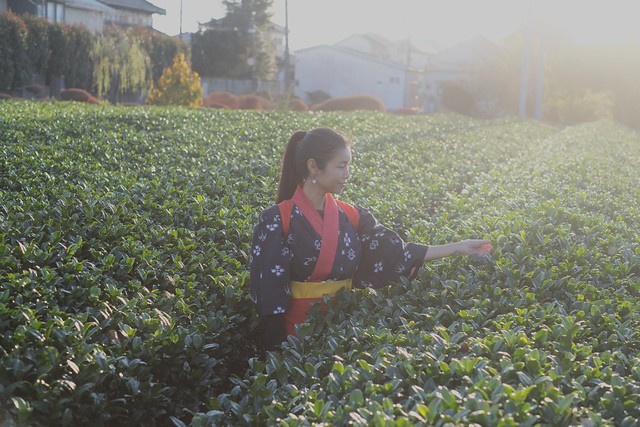

Over the years, living in Japan has slowly changed the way I travel.
In the beginning, I was like everyone else. I chased every park filled with pink blossoms and a million selfie sticks. It felt compulsory to collect every single iconic view on my feed. But somewhere along the way, I started realizing that it was the places that weren’t trending that made my heart flutter.
If this is your first time in Japan, I completely understand. Tokyo feels like the main event. But the prefectures quietly supporting this megacity hold so many surprises, many of which are exactly what made me want to dig deeper and deeper.
Chiba and Ibaraki sit right next to Tokyo, so close that many people pass through without even thinking twice. Some fly into Narita and head straight into the city. Others glance at the map and move on.
And yet, that is how you miss the plum blossoms blooming in peaceful gardens. Torii gates standing against ocean waves. Generations-old farms, humble seafood markets, and people so warm and welcoming you might start imagining a second home.
This time, I decided to slow down and really look at them. Let me share what I found during my recent trip, theme by theme.
Seasonal Flowers
Kairakuen Garden, IBARAKI

In Ibaraki, I visited Kairakuen in Mito City, known as one of Japan’s Three Great Gardens.

Over 3,000 plum trees bloom here from February to March, filling the park with soft fragrance and shades of white and pink. It felt spacious and calm, the kind of place where you can actually slow down.

From Tokyo, it takes about 70 to 90 minutes by limited express train from Ueno to Mito Station, followed by a short bus ride or taxi to the garden.
Tsutsumigayaseki, CHIBA

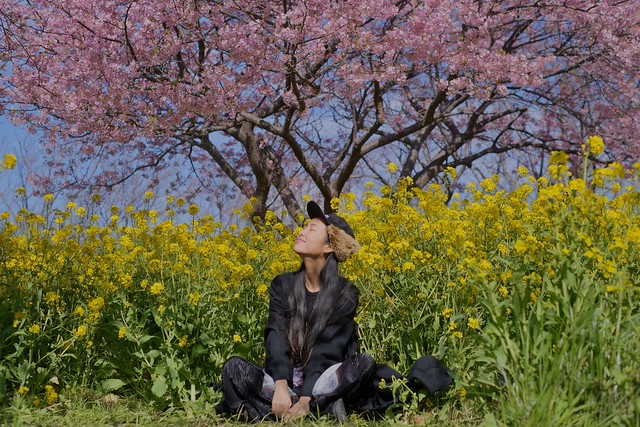
If you think of Chiba only as beaches or the airport, Tsutsumugaya Seki will gently change your mind. It’s a small riverside park in Kyonan Town, tucked in the far south of Chiba Prefecture, and every mid-February it becomes a secret stage for Kawazu cherry blossoms and nanohana (rapeseed flowers) blooming side by side.

Unlike the mega-popular cherry blossom spots where you’re shoulder-to-shoulder with cameras and crowds, here the blossoms feel almost personal. The trees lean over winding paths and a gentle river, and the bright yellow of the nanohana fields pops against the soft pink of the early sakura.
Nanabatake Road, CHIBA

As a bonus, Nanabatake Road in Kamogawa is a simple but joyful stop. A long stretch of nanohana fields under wide skies, completely free to visit.

It is about 15 minutes by car from Awa-Kamogawa Station. Renting a car in southern Chiba makes exploring much easier and allows you to enjoy the coastal roads at your own pace.
These are the kinds of seasonal moments that quietly reward you. No rush. No chaos. Just spring unfolding exactly as it should.
Sacred Spots
Long before Tokyo became the capital, eastern Japan had its own spiritual center.
In this region, three important shrines formed what is known as the Togoku Sansha. Think of it as a spiritual triangle across today’s Ibaraki and Chiba. For centuries, people visited all three shrines as a form of pilgrimage, praying for protection, strength, and safe travels.
The three shrines are Kashima Jingu Grand Shrine in Ibaraki, Katori Jingu in Chiba, and Ikisu Jinja in Ibaraki.
Katori Jingu, CHIBA

We began at Katori Jingu in Chiba, one of the most important shrines in eastern Japan. It enshrines Futsunushi-no-Okami, a powerful deity associated with protection, wisdom, and nation-building.
One of the most remarkable features is the sacred tree within the grounds. This towering cedar is said to be over a thousand years old. Standing before it, you cannot help but feel small in the most grounding way.
From Tokyo, it takes around two hours by train via Narita and Sawara, making it very doable as a day trip.
Ikisu Jinja, IBARAKI

Next is Ikisu Jinja, located near the Tone River in Ibaraki. Compared to Katori, it feels more intimate and local.
Within the grounds, you will also find the Sasareishi, a sacred rock formation that holds symbolic meaning in Shinto belief. The word sasareishi refers to small stones that, over time, merge and become one larger rock. It represents unity, longevity, and the quiet strength that comes from togetherness. If you have heard Japan’s national anthem, the lyrics actually mention sasareishi, which makes encountering it here feel even more meaningful.
Ikisu Jinja is about 15 minutes by car from Kashima, so many visitors combine the two.
Kashima Jingu Grand Shrine, IBARAKI
The most prominent of the three is Kashima Jingu Grand Shrine, also in Ibaraki. It has a history of over 2,000 years and enshrines a powerful deity associated with thunder and martial strength. In the past, samurai would pray here before going into battle.
Unfortunately, we did not manage to visit Kashima Jingu Grand Shrine this time, but it remains on my list for the next trip. If you are planning your route, it makes perfect sense to include it and complete the full Togoku Sansha pilgrimage.
Together, these sacred sites reveal a different layer of Chiba and Ibaraki. Not just seasonal beauty, but deep roots that continue to shape the region quietly.
Other Shrines Worth Visiting
Not every sacred place has to come with a pilgrimage title. Some simply leave an impression because of where they stand, or the stories they quietly hold.
Oarai Isosaki Jinja, IBARAKI

If you have seen a torii gate dramatically perched on rocks facing the ocean, chances are it was this one.
Oarai Isosaki Shrine sits along the Pacific coast, and its famous Kamiiso no Torii stands against crashing waves and open sky. At sunrise, the scene feels almost cinematic. The light hits the water, and the torii looks like it is standing guard between land and sea.
The shrine itself dates back over a thousand years and is dedicated to deities associated with medicine and good fortune. But even if you do not come for religious reasons, the setting alone makes it unforgettable.
Hoshiimo Shrine, IBARAKI

Who would have thought a sweet potato shrine could exist? And yes, that is exactly what Ibaraki is famous for.
Hoshiimo Shrine is dedicated to hoshiimo, dried sweet potatoes that are one of the prefecture’s best-known specialties.

Rows of golden torii gates line the path, creating a glowing tunnel that feels both playful and quietly sacred. Beyond the photogenic scene, it reflects something deeply Japanese. Even something as humble as local produce can be honored and woven into spiritual life. There is a kind of sincerity to it that makes you smile.
Together, these shrines reveal how spirituality here exists on many levels. From ancient deities who once guided warriors and shaped the nation, to gratitude for a simple sweet potato that has sustained generations.
Monumental Buddha Statues
Chiba and Ibaraki each claim a kind of greatness when it comes to Buddha statues. One is the largest seated stone Buddha in Japan, carved directly into a mountainside. The other is the largest bronze Buddha in the world, towering over the countryside at 120 meters tall. Different materials. Different eras. Different atmospheres. Yet both are undeniably grand in their own category.
Nihon-ji Temple, CHIBA

Hidden within Mount Nokogiri in Chiba, Nihon-ji Temple is home to the Great Buddha of Nihon-ji, a 31-meter-tall seated statue carved directly from the rock face. Unlike bronze statues that are cast and assembled, this one was shaped from the mountain itself during the Edo period. But note that Nihon-ji Temple has roots that go all the way back to 725, when it was founded during the Nara period, which makes it a super ancient temple.

While you are on Mount Nokogiri, do not miss Jigoku Nozoki, which literally means “peering into hell.” It is a dramatic cliff viewpoint where a rocky ledge juts out over a steep drop. Standing there, looking down at the sweeping view below, your legs may feel slightly weak, but the scenery is breathtaking.

Mount Nokogiri is also home to a newer stone Buddha carving. In recent years, another large image of Yakushi Nyorai was completed on a different rock face, continuing the tradition of carving directly into the mountain.
Ushiku Daibutsu, IBARAKI

If Mount Nokogiri feels carved into the earth, Ushiku Daibutsu feels like it rises straight into the sky.
Standing at 120 meters tall, it is officially the largest bronze Buddha statue in the world that made it into a Guiness World Records. Even from the highway, you can see it quietly dominating the horizon. But no matter how many times you read the number, the scale is still hard to process in real life.

Inside the building at the base, there is a display of the Buddha’s enormous big toe. Just the toe. Standing next to it, you suddenly understand the proportions. What looked distant and elegant from afar becomes almost unimaginable up close. That single detail alone makes you realize how massive the entire statue truly is.
Visitors can enter the statue and travel upward through several levels, learning about Buddhist teachings before reaching an observation deck near the chest area. Looking out from that height over the flat Ibaraki plains gives you a completely different sense of perspective.
Traditions, Innovations and the People Who Keep Them Alive
At some point, travel stops being about landmarks and starts being about people. The ones who choose to stay. The ones who build something out of love for their hometown. The ones who quietly carry tradition forward without making a big announcement about it.
NON Cafe, CHIBA

In Kanaya, a quiet port town in southern Chiba, NON Cafe feels like a love letter to the prefecture. Opened by Ueda san, a self-proclaimed Chiba fanatic, it was created out of genuine pride for the region and a desire to share its charm in a personal way.

A short walk from the station and near the ferry terminal overlooking Tokyo Bay, the cafe is cozy and unpretentious.

Their handmade desserts carry that same honest sweetness. Nothing overly flashy, just genuinely good. What makes NON special is not just the food, but the conversation. Sit long enough and you will hear stories about hidden beaches, local favorites, and why Chiba deserves more love.
And somehow, you will start to agree.
Jiroemu Farmer’s Residence & Restaurant, CHIBA

Further south in Minamiboso, Jiroemu tells a story that spans generations. Now run by the 15th generation, this organic farm has been cultivating the land for centuries, quietly continuing a way of life that feels increasingly rare.

This is more than just a vegetable farm. They raise their own free-range chickens and use the freshest eggs in many of their dishes. Vegetables are grown seasonally and used in creative, homey ways.

Here, you can enjoy a farm-to-table lunch made from seasonal organic vegetables grown right on their fields. The dishes are simple, but deeply satisfying. It is a glimpse into a slower rhythm of life, where the land is not rushed and traditions are passed down with care.
Tsukuba Bunkago, IBARAKI

Tsukuba Bunkago is not a typical museum-style cultural spot. It feels more like a little village where old rural Japan has been carefully kept alive, then gently opened up for people to spend time in.

Set in the countryside around Tsukuba, it is built around a 150-year-old traditional farmhouse and the kind of nostalgic “satoyama” atmosphere that is getting harder to find. But it is not frozen in the past. Inside the grounds, you can wander between a gallery space in a nagayamon style gate building, small shops, a furniture and antique space, and a cafe. It is basically a place where you can slow down and enjoy a different “time zone” of Tsukuba, the one that exists outside the science city image.
Where to Stay
A destination feels different depending on where you wake up. In both Ibaraki and Chiba, the stays we experienced reflected the same spirit as everything else. Rooted, thoughtful, and full of personality.
The Botanical Resort Rinne, IBARAKI

In Ibaraki, there’s a place that feels like staying inside a living garden rather than a typical hotel. Rinne Botanical Resort is the newly reinvented botanical garden where you can actually stay overnight, set within the grounds of what used to be Ibaraki Prefectural Botanical Garden.

The accommodations range from cozy cottages that feel almost like a wooden hideaway to glamping tents tucked among trees.

During your stay you can wander the plant collections, enjoy meals made with local ingredients, or relax in the hot springs and herbal saunas in the on-site bathing complex. There’s even a light-up show in the tropical greenhouse at night that turns the garden into a glowing jungle under music and soft lights.
Kanda Guest House, CHIBA

This is one of those experiences where the people matter the most. Kanda in Katsuura is a humble little “minshuku” guesthouse with simple rooms, but the heart of the place is Ezawa-san. He is easily one of the most jovial hosts I have ever met. The kind who laughs loudly, shares stories passionately, and will go the extra mile just to make sure you are happy and well fed.

There is even a goat on the property that you can freely interact with! It feels less like checking into accommodation and more like visiting a friend’s countryside home.

Ezawa-san goes completely over the top when it comes to seafood. Fresh, generous, beautifully prepared. The robatayaki spread which includes abalone, lobsters and the best catch of the day, is the kind that makes you pause mid-meal just to appreciate how lucky you are.
Bonus: Katsuura Morning Market

If you stay at Kanda Guesthouse, wake up early and take a short walk to the Katsuura Morning Market. It is one of the oldest morning markets in Japan, said to have a history of over 400 years.

The market stretches along the street with small stalls selling fresh seafood, local produce, dried fish, handmade snacks, and seasonal treats. It feels local, lived-in, and genuine. You will see elderly vendors chatting with regular customers, farmers unloading their morning harvest, and visitors slowly browsing with coffee in hand.
Final Thoughts
Chiba and Ibaraki sit right next to Tokyo’s bright lights, but they offer something just as meaningful. Plum blossoms you can actually stand under without being rushed. Shrines where the sea breeze and forest air feel older than the city skyline. Buddhas so large you instinctively tilt your head back and go quiet. Farmers already at work before the sun is fully up. Café owners who talk about their prefecture like it’s their life’s calling. A host who grills seafood as if your happiness depends on it.
If you’re planning your next trip to Japan, maybe look just a little beyond Tokyo.
You might feel that small, unexpected flutter too.